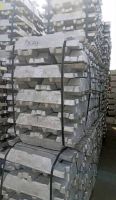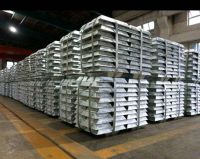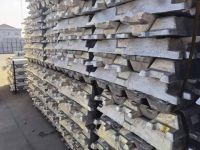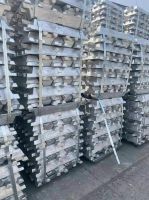

离岸价格
获取最新报价40 ~ 48 USD / Metric Ton
|2000 Metric Ton Minimum Order
国家:
Cameroon
型号:
-
离岸价格:
40 ~ 48 USD / Metric Ton 获取最新报价
位置:
DRC congo and Zambia
最小订单价格:
40 per Metric Ton
最小订单:
2000 Metric Ton
包装细节:
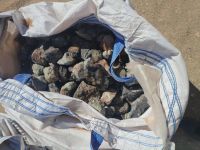
Standard export packaging in jumbo bags
交货时间:
35 to 45
供应能力:
20000 Metric Ton per Month
付款方式:
T/T, D/A, D/P, Western Union, Money Gram
產品組 :

联系人 Mr. Billa
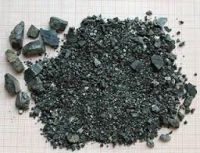
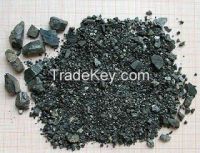
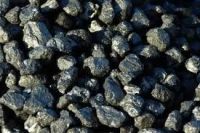
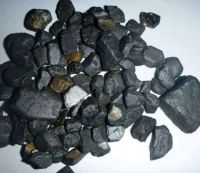
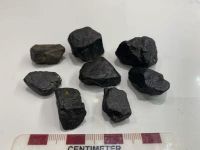
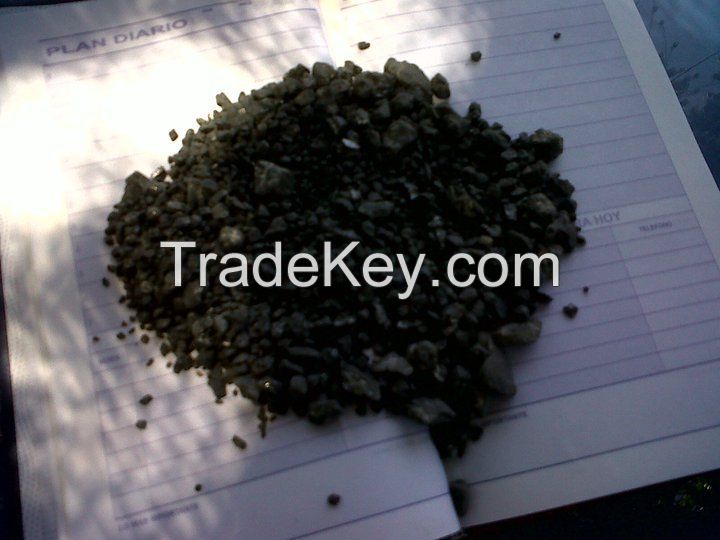
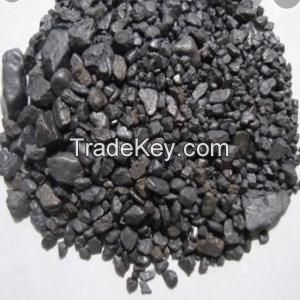
Coltan (short for columbitetantalite's and known industrially as
tantalite) is a dull black metallic ore from which are extracted
the elements niobium and tantalum. The niobium-dominant mineral in
coltan is columbite (after niobium's original American name
columbium), and the tantalum-dominant mineral is tantalite.
Tantalum from coltan is used to manufacture tantalum capacitors
which are used for portable telephones, personal computers,
automotive electronics, and cameras. Coltan mining has financed
serious conflicts
About coltan
Early history
Coltan was discovered in ***2, one year after niobium. In ***1,
Charles Hatchett (********7), an English chemist, analyzed a
specimen of an unknown mineral from the collection of the British
Museum in London. This was a heavy black mineral obtained from the
collection of the first governor of Connecticut, John Winthrop, who
was an alchemist, manufacturing chemist, physician, and rock
collector. The mineral, later called columbite, was found near New
London, Connecticut. Charles Hatchett determined that this mineral
contained a 'new earth', which implied a new element had been
found. He named this element columbium apparently in reference to
its source being America.
The names columbium and niobium were both used to identify this
element for almost another century, with columbium being preferred
in the Americas. It was not until ***9 that the International Union
of Pure and Applied Chemistry (IUPAC) officially adopted niobium as
the name for this element. Old habits die slowly, and some
metallurgists continue to use the term columbium to this day.
Typical market specifications
Coltan on the international market generally contains a minimum of
*0% Ta2O5, while lower grade material with a minimum of *0% Ta2O5
may also be of interest. The commercial payable value is based on
the Ta2O5 content alone, any Nb2O5 is generally ignored.
Should material contain mainly Nb2O5 and only little Ta2O5, then it
would be sold as columbite and should contain a minimum of *0%
Nb2O5. The payable value is based on the Nb2O5+Ta2O5 content
payable entirely as Nb2O5; the Ta2O5 content is not paid a higher
rate.
Other Requirements
Coltan and niobium raw materials often contain somewhat elevated
levels of naturally occurring and , usually high enough for them to
be classified as radioactive for handling and transport. Such raw
materials are then also known as Naturally Occurring Radioactive
Materials (NORM).
It is incumbent on any producer or trader to also analyze for Th
and U in order to demonstrate whether the material is radioactive
or not. This is reflected in the T.I.C.'s Transport Policy. As a
guide, these elements are of concern for the purpose of mining and
handling at levels above 1 Bq/g, a level obtained from e.g. 0.**3%
ThO2 plus 0.***8% U3O8, whereas for transport alone the levels of
concern are an order of magnitude higher, i.e.*0 Bq/g or 0.*3% ThO2
plus 0.**8% U3O8.
Production of raw materials
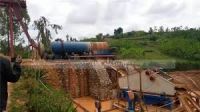
Extraction or production of Coltan raw materials of all kinds is
widespread, whether by primary industrial mining, artisanal mining,
as a secondary mineral or as a byproduct. Brazil is currently the
major producer. Significant quantities are also produced in China,
the DR Congo, Russia and Rwanda. Additional quantities are
produced, some intermittently or at a low level,Processing:
extraction and refining
The extraction and refining of Coltan, including the separation
from niobium in these various tantalum-containing mineral
concentrates, is generally accomplished by treating the ores with a
mixture of hydrofluoric and sulfuric acids at elevated
temperatures. This causes the Coltan and niobium values to dissolve
as complex fluorides, and numerous impurities that were present
also dissolve. Other elements such as silicon, iron, manganese,
titanium, zirconium, , , rare earths, et c. are generally present.
The filtration of the digestion slurry, and further processing via
solvent extraction using methyl isobutyl ketone (MIBK) or liquid
ion exchange using an amine extractant in kerosene, produces highly
purified solutions of Coltan and niobium. Generally, the tantalum
values in solution are converted into potassium tantalum fluoride
(K2TaF7) or tantalum oxide (Ta2O5). The niobium is recovered as
niobium oxide (Nb2O5) via neutralization of the niobium fluoride
complex with ammonia to form the hydroxide, followed by calcination
to the oxide.
There exist alternative methods which are used when they are better
suited to particular local conditions. One used for a
titanium-niobium-tantalum-rare earth mineral concentrate involves
blending the crushed concentrate with coke and passing this through
a chlorination stage which separates out the rare earths and other
elements including most of the . The resulting
titanium-niobium-tantalum oxychloride gas is dropped in temperature
which causes the iron, and alkali metals to precipitate out. The
cleaned titanium-niobium-tantalum oxychloride gas is then cooled to
a liquid and distilled to separate out low-boiling titanium
chloride gas, whereafter the niobium-tantalum oxychloride gas is
further chlorinated to produce NbCl5 and TaCl5. These chlorides are
fractionally distilled and the niobium chloride subsequently
reacted with steam to produce the hydroxide which is calcined to
oxide. The tantalum chloride is reacted with ammonium hydroxide to
produce the oxide.
The primary tantalum chemicals of industrial significance, in
addition to K2TaF7 and Ta2O5, are tantalum chloride (TaCl5),
lithium tantalate (LiTaO3) and tantalum carbide (TaC).
Tantalum metal powder, including the precursor to capacitor grade
powder, is generally produced by the sodium reduction of the
potassium tantalum fluoride in a molten salt system at high
temperature. The metal can also be produced by the carbon or
aluminum reduction of the oxide or the hydrogen or alkaline earth
reduction of tantalum chloride. The choice of process is based on
the specific application and whether the resultant tantalum will be
further consolidated by processing into ingot, sheet, rod, tubing,
wire and other fabricated articles.
The consolidation of metal powder for ingot and processing into
various metallurgical products begins with either vacuum arc
melting or electron beam melting of metal feedstocks, comprised of
powder or high purity scrap where the elements with boiling points
greater than tantalum are not present. Double and triple melt
ingots achieve a very high level of purification with regard to
metallics and interstitials. Ingots are used to produce the various
metallurgical products named earlier. Ingot stock is also used for
the production of such alloys as tantalum**0% tungsten. Ingot and
pure tantalum scrap are used in the production of alloys for land
and air-based turbines.
Use and demand
Coltan is used primarily for the production of tantalum capacitors,
used in many electronic devices. Many sources mention coltan's
importance in the production of mobile phones, but tantalum
capacitors are used in almost every kind of electronic device.
Niobium and tantalum have a wide range of uses, including
refractive lenses for glasses, cameras, phones and printers. They
are also used in semiconductor circuits, and capacitors for small
electronic devices such as hearing aids, pacemakers, and mp3
players, as well as in computer hard drives, automobile
electronics, and surface acoustic wave (SAW) filters for mobile
phones.
Coltan is also used to make high-temperature alloys for jet engines
and air- and land-based turbines. More recently, the
nickel-tantalum superalloys used in jet engines account for *5% of
tantalum consumption, but pending orders for the Airbus and the **7
Dreamliner may increase this proportion, as well as China's
pending order for *2 ****8 airplanes.
COLTAN (Columbite-Tantalite) is a dull metallic ore found in major
quantities in the eastern areas of Congo. When refined, COLTAN
becomes metallic Tantalum, a heat-resistant powder that can hold a
high electrical charge.
Columbite ((Fe, Mn, Mg)(Nb, Ta)2O6 : Iron Manganese Magnesium
Niobium Tantalum Oxide) is the most abundant niobium mineral and is
used in alloys for improved strength. Also known as Niobium, it
also has shown potential superconductive properties and is being
used in studies with other metals for possible breakthroughs in the
manufacturing of superconductive alloys.
The COLTAN
Tantalite ((Fe, Mn)(Ta, Nb)2O6 : Iron Manganese Tantalum Niobium
Oxide) is the most widespread tantalum mineral and makes for an
important ore of the industrially useful metal. Tantalum (Ta) is a
gray, heavy, and extremely hard metal. When pure, it is ductile and
can be drawn into fine wire, which is used as a filament for
evaporating metals such as aluminum. Tantalum is almost completely
immune to chemical reaction at temperatures low temperatures
(sub***0 degrees C), and is reactive only with hydrofluoric acid,
acidic solutions containing the fluoride ion, and free sulfur
trioxide. At higher temperatures, Tantalum becomes much more
reactive though it has a melting point exceeded only by Tungsten
and Rhenium. Tantalum is used to make a variety of alloys with
desirable properties such as extremely high melting points, extreme
strength, good ductility, etc. Tantalum has good gettering ability
at high temperatures, and tantalum oxide films are stable with good
rectifying and dielectric properties.
Tantalum is used mainly in the manufacture of condensers and
micro-electronic technology (chips and processors), cell phones and
nuclear reactors. It is also used in the production of steel
varieties having a high heat tolerances, like those used in the
engines of aircraft. Whereas it was formerly only one secondary
product of the exploitation of Tin, Tantalum became today, under
the terms of its specific characteristics, a very required
element.
The principal modern extraction takes place in many places, in the
Wodgina mine, where the annual production of Ta2O5 reaches
approximately **0,**0 tons. In ***0, the ore typically sold on
world markets for approximately $**0.*0 USD per kilogram. The
recent technology boom and low availability of COLTAN caused a
substantial increase in the price to almost $**0 USD per kilogram
at one point, as supply struggled to meet the demands of companies
such as Nokia and Sony.
Little information is currently available regarding the amount of
radiation absorbed by the body via the inhalation of dust during
the treatment and extraction of COLTAN. It is known however that
the radioactivity is found almost entirely in the residue of the
ore, and not in its finished products (GSM, computers, etc.).
Coltan
Coltan (short for columbitetantalite's and known industrially as
tantalite) is a dull black metallic ore from which are extracted
the elements niobium and tantalum. The niobium-dominant mineral in
coltan is columbite (after niobium's original American name
columbium), and the tantalum-dominant mineral is tantalite.
Tantalum from coltan is used to manufacture tantalum capacitors
which are used for portable telephones, personal computers,
automotive electronics, and cameras. Coltan mining has financed
serious conflicts
About coltan
Early history
Coltan was discovered in ***2, one year after niobium. In ***1,
Charles Hatchett (********7), an English chemist, analyzed a
specimen of an unknown mineral from the collection of the British
Museum in London. This was a heavy black mineral obtained from the
collection of the first governor of Connecticut, John Winthrop, who
was an alchemist, manufacturing chemist, physician, and rock
collector. The mineral, later called columbite, was found near New
London, Connecticut. Charles Hatchett determined that this mineral
contained a 'new earth', which implied a new element had been
found. He named this element columbium apparently in reference to
its source being America.
The names columbium and niobium were both used to identify this
element for almost another century, with columbium being preferred
in the Americas. It was not until ***9 that the International Union
of Pure and Applied Chemistry (IUPAC) officially adopted niobium as
the name for this element. Old habits die slowly, and some
metallurgists continue to use the term columbium to this day.
Typical market specifications
Coltan on the international market generally contains a minimum of
*0% Ta2O5, while lower grade material with a minimum of *0% Ta2O5
may also be of interest. The commercial payable value is based on
the Ta2O5 content alone, any Nb2O5 is generally ignored.
Should material contain mainly Nb2O5 and only little Ta2O5, then it
would be sold as columbite and should contain a minimum of *0%
Nb2O5. The payable value is based on the Nb2O5+Ta2O5 content
payable entirely as Nb2O5; the Ta2O5 content is not paid a higher
rate.
Other Requirements
Coltan and niobium raw materials often contain somewhat elevated
levels of naturally occurring and , usually high enough for them to
be classified as radioactive for handling and transport. Such raw
materials are then also known as Naturally Occurring Radioactive
Materials (NORM).
It is incumbent on any producer or trader to also analyze for Th
and U in order to demonstrate whether the material is radioactive
or not. This is reflected in the T.I.C.'s Transport Policy. As a
guide, these elements are of concern for the purpose of mining and
handling at levels above 1 Bq/g, a level obtained from e.g. 0.**3%
ThO2 plus 0.***8% U3O8, whereas for transport alone the levels of
concern are an order of magnitude higher, i.e.*0 Bq/g or 0.*3% ThO2
plus 0.**8% U3O8.
Production of raw materials
Extraction or production of Coltan raw materials of all kinds is
widespread, whether by primary industrial mining, artisanal mining,
as a secondary mineral or as a byproduct. Brazil is currently the
major producer. Significant quantities are also produced in China,
the DR Congo, Russia and Rwanda. Additional quantities are
produced, some intermittently or at a low level,Processing:
extraction and refining
The extraction and refining of Coltan, including the separation
from niobium in these various tantalum-containing mineral
concentrates, is generally accomplished by treating the ores with a
mixture of hydrofluoric and sulfuric acids at elevated
temperatures. This causes the Coltan and niobium values to dissolve
as complex fluorides, and numerous impurities that were present
also dissolve. Other elements such as silicon, iron, manganese,
titanium, zirconium, , , rare earths, et c. are generally present.
The filtration of the digestion slurry, and further processing via
solvent extraction using methyl isobutyl ketone (MIBK) or liquid
ion exchange using an amine extractant in kerosene, produces highly
purified solutions of Coltan and niobium. Generally, the tantalum
values in solution are converted into potassium tantalum fluoride
(K2TaF7) or tantalum oxide (Ta2O5). The niobium is recovered as
niobium oxide (Nb2O5) via neutralization of the niobium fluoride
complex with ammonia to form the hydroxide, followed by calcination
to the oxide.
There exist alternative methods which are used when they are better
suited to particular local conditions. One used for a
titanium-niobium-tantalum-rare earth mineral concentrate involves
blending the crushed concentrate with coke and passing this through
a chlorination stage which separates out the rare earths and other
elements including most of the . The resulting
titanium-niobium-tantalum oxychloride gas is dropped in temperature
which causes the iron, and alkali metals to precipitate out. The
cleaned titanium-niobium-tantalum oxychloride gas is then cooled to
a liquid and distilled to separate out low-boiling titanium
chloride gas, whereafter the niobium-tantalum oxychloride gas is
further chlorinated to produce NbCl5 and TaCl5. These chlorides are
fractionally distilled and the niobium chloride subsequently
reacted with steam to produce the hydroxide which is calcined to
oxide. The tantalum chloride is reacted with ammonium hydroxide to
produce the oxide.
The primary tantalum chemicals of industrial significance, in
addition to K2TaF7 and Ta2O5, are tantalum chloride (TaCl5),
lithium tantalate (LiTaO3) and tantalum carbide (TaC).
Tantalum metal powder, including the precursor to capacitor grade
powder, is generally produced by the sodium reduction of the
potassium tantalum fluoride in a molten salt system at high
temperature. The metal can also be produced by the carbon or
aluminum reduction of the oxide or the hydrogen or alkaline earth
reduction of tantalum chloride. The choice of process is based on
the specific application and whether the resultant tantalum will be
further consolidated by processing into ingot, sheet, rod, tubing,
wire and other fabricated articles.
The consolidation of metal powder for ingot and processing into
various metallurgical products begins with either vacuum arc
melting or electron beam melting of metal feedstocks, comprised of
powder or high purity scrap where the elements with boiling points
greater than tantalum are not present. Double and triple melt
ingots achieve a very high level of purification with regard to
metallics and interstitials. Ingots are used to produce the various
metallurgical products named earlier. Ingot stock is also used for
the production of such alloys as tantalum**0% tungsten. Ingot and
pure tantalum scrap are used in the production of alloys for land
and air-based turbines.
Use and demand
Coltan is used primarily for the production of tantalum capacitors,
used in many electronic devices. Many sources mention coltan's
importance in the production of mobile phones, but tantalum
capacitors are used in almost every kind of electronic device.
Niobium and tantalum have a wide range of uses, including
refractive lenses for glasses, cameras, phones and printers. They
are also used in semiconductor circuits, and capacitors for small
electronic devices such as hearing aids, pacemakers, and mp3
players, as well as in computer hard drives, automobile
electronics, and surface acoustic wave (SAW) filters for mobile
phones.
Coltan is also used to make high-temperature alloys for jet engines
and air- and land-based turbines. More recently, the
nickel-tantalum superalloys used in jet engines account for *5% of
tantalum consumption, but pending orders for the Airbus and the **7
Dreamliner may increase this proportion, as well as China's
pending order for *2 ****8 airplanes.
COLTAN (Columbite-Tantalite) is a dull metallic ore found in major
quantities in the eastern areas of Congo. When refined, COLTAN
becomes metallic Tantalum, a heat-resistant powder that can hold a
high electrical charge.
Columbite ((Fe, Mn, Mg)(Nb, Ta)2O6 : Iron Manganese Magnesium
Niobium Tantalum Oxide) is the most abundant niobium mineral and is
used in alloys for improved strength. Also known as Niobium, it
also has shown potential superconductive properties and is being
used in studies with other metals for possible breakthroughs in the
manufacturing of superconductive alloys.
The COLTAN
Tantalite ((Fe, Mn)(Ta, Nb)2O6 : Iron Manganese Tantalum Niobium
Oxide) is the most widespread tantalum mineral and makes for an
important ore of the industrially useful metal. Tantalum (Ta) is a
gray, heavy, and extremely hard metal. When pure, it is ductile and
can be drawn into fine wire, which is used as a filament for
evaporating metals such as aluminum. Tantalum is almost completely
immune to chemical reaction at temperatures low temperatures
(sub***0 degrees C), and is reactive only with hydrofluoric acid,
acidic solutions containing the fluoride ion, and free sulfur
trioxide. At higher temperatures, Tantalum becomes much more
reactive though it has a melting point exceeded only by Tungsten
and Rhenium. Tantalum is used to make a variety of alloys with
desirable properties such as extremely high melting points, extreme
strength, good ductility, etc. Tantalum has good gettering ability
at high temperatures, and tantalum oxide films are stable with good
rectifying and dielectric properties.
Tantalum is used mainly in the manufacture of condensers and
micro-electronic technology (chips and processors), cell phones and
nuclear reactors. It is also used in the production of steel
varieties having a high heat tolerances, like those used in the
engines of aircraft. Whereas it was formerly only one secondary
product of the exploitation of Tin, Tantalum became today, under
the terms of its specific characteristics, a very required
element.
The principal modern extraction takes place in many places, in the
Wodgina mine, where the annual production of Ta2O5 reaches
approximately **0,**0 tons. In ***0, the ore typically sold on
world markets for approximately $**0.*0 USD per kilogram. The
recent technology boom and low availability of COLTAN caused a
substantial increase in the price to almost $**0 USD per kilogram
at one point, as supply struggled to meet the demands of companies
such as Nokia and Sony.
Little information is currently available regarding the amount of
radiation absorbed by the body via the inhalation of dust during
the treatment and extraction of COLTAN. It is known however that
the radioactivity is found almost entirely in the residue of the
ore, and not in its finished products (GSM, computers,
etc.).
We supply high-grade ColtanTantalite Ore (Ta₂O₅ content
***0%), sourced directly from the Democratic Republic of Congo
(DRC) and Zambia, suitable for industrial applications in tantalum
and niobium production.
Specifications & Chemical Breakdown (Typical):
Ta₂O₅: ***0%
Nb₂O₅: ***5%
Fe₂O₃: **2%
TiO₂: *8%
SnO₂: *5%
SiO₂ + other trace elements: Balance
Condition: Free from radioactive and hazardous
materials
Inspection: SGS or equivalent at loading port
Commercial Terms:
Quantity Available: *0,**0 MT (monthly supply
capacity)
Trial Shipment: 2,***3,**0 MT
Price: USD $*0/lb per MT (CIF basis)
Origin: DRC & Zambia
Port of Loading: Dar es Salaam, Tanzania
Delivery Estimate:
Asia: ***0 days
Europe: ***5 days
North America: ***0 days
South America: ***5 days
Packaging & Packing:
Standard export packaging in jumbo bags (*2 MT
each)
Bags securely strapped and palletized (if
required)
Seaworthy packaging to buyers specifications
Container Loading Capacity:
*0 container: ~***2 MT
*0 HC container: ~***8 MT
We ensure reliable supply, SGS-certified quality and quantity, and
secure shipping under CIF terms.
| 国家: | Cameroon |
| 型号: | - |
| 离岸价格: | 40 ~ 48 / Metric Ton 获取最新报价 |
| 位置: | DRC congo and Zambia |
| 最小订单价格: | 40 per Metric Ton |
| 最小订单: | 2000 Metric Ton |
| 包装细节: | Standard export packaging in jumbo bags |
| 交货时间: | 35 to 45 |
| 供应能力: | 20000 Metric Ton per Month |
| 付款方式: | T/T, D/A, D/P, Western Union, Money Gram |
| 產品組 : | Coltan (Tantalite) Ore |