联系人 Evan
Auto Parts Inspection
Auto parts inspection services refer to the comprehensive assessment and evaluation of various components, parts, or products within the manufacturing industry. Inspection services involve a systematic examination to ensure that the manufactured parts meet the required specifications and quality standards. This essential process plays a pivotal role in maintaining product integrity, minimizing defects, and ensuring customer satisfaction.
At SIT, quality-assurance inspection
of automotive parts made of metals and polymer …
automotive parts inspection is the systematic process of
evaluating parts during manufacturing or maintenance to ensure
they meet quality, safety, and performance standards. It involves
various checks, from visual and dimensional tests to complex
functional and material testing, to identify defects, verify
consistency, and prevent potential issues like recalls and safety
hazards.
Automobiles are representative
products of the manufacturing industry, and it is said that there
are about *0,**0 component parts. It is said that the number of
parts will be reduced to about *0,**0 due to the transition from
gasoline cars to EV vehicles, but it is still a product composed of
a huge number of parts.
Automotive parts inspection is an important part of protecting
the safety of people in and around them, and auto parts
manufacturers must ensure the quality of parts through rigorous
inspections. In recent years, quality requirements from end users
and automobile manufacturers have been increasing, and total
inspections are becoming commonplace. It can be said that
automotive parts manufacturers should reconsider their inspection
methods.
There are several types of inspection methods for automotive parts. The following is a summary of the features of each.
> Visual
inspection
Visual visual inspection is still common in the inspection of
automotive parts. The content is that the inspector checks the
parts visually and palpation for scratches and defects.
The advantages of visual inspection include the ability to reduce
initial costs without the need for special equipment, the ability
to move parts freely for inspection, and the ability to flexibly
change the inspection content.
On the other hand, there are disadvantages such as the inability
to make objective judgments and the tendency for human variation
to occur, the possibility of missing scratches and defects due to
mistakes, and the time required for inspection. In recent years,
an increasing number of companies are working on the automation
of visual inspections with the aim of improving inspection
quality and solving labor shortages.
> Visual
inspection with a measuring instrument
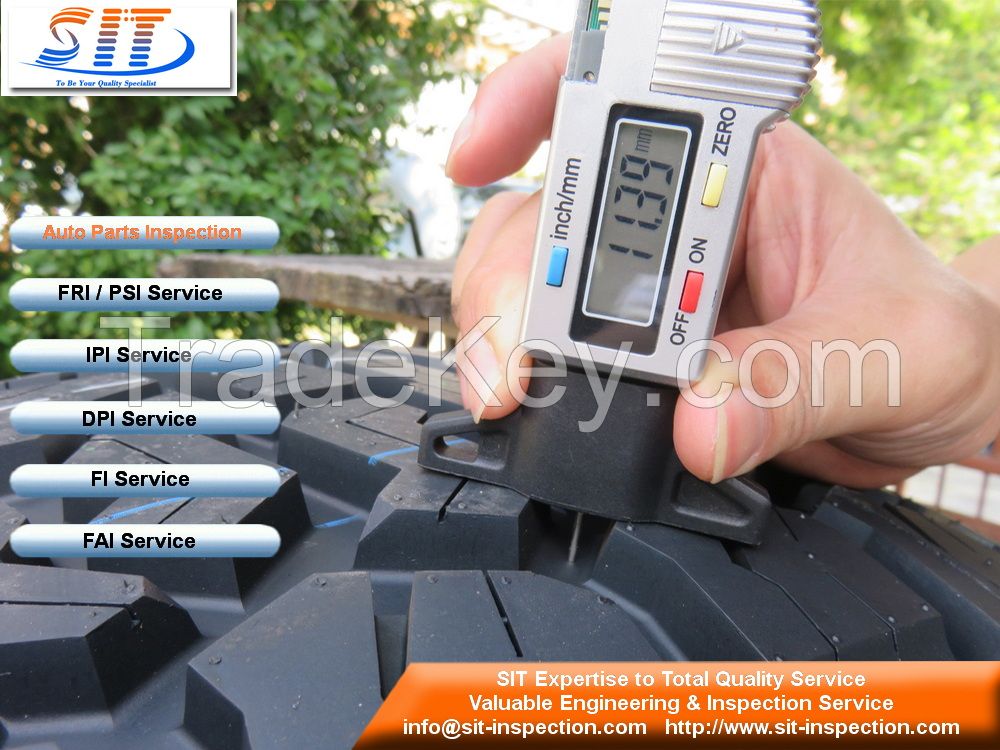
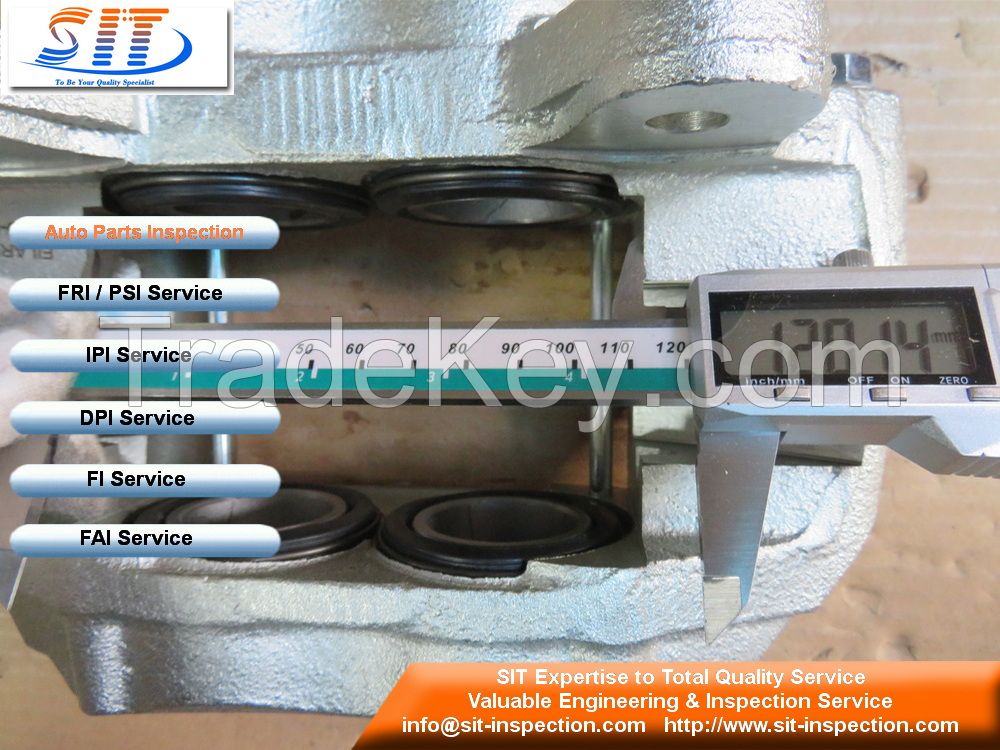
The mainstream inspection of automobile parts is visual
inspection using various measuring instruments. Using measuring
instruments, we check whether the dimensions and shape of parts
are finished according to standards, and check for scratches and
defects.
The advantages of visual inspection using measuring instruments
include the ability to automate and speed up inspections, and the
ability to make objective judgments based on numerical values.
When inspecting products that require high quality, such as
automobile parts, visual inspection with a measuring instrument
is preferable to visual inspection.
On the other hand, there are disadvantages such as difficulty in
responding to unexpected problems and the cost of introducing and
maintaining measuring instruments.
> Performance inspection
Depending on the type of automobile part, not only the appearance
inspection but also the performance inspection may be required.
For example, structural parts are inspected for their durability
and durability, such as fatigue strength, heat resistance, and
corrosion resistance. In addition, with the computerization of
automobiles, there are more opportunities to evaluate the
electrical characteristics of electronic components and conduct
continuity inspections.
Performance inspections are often carried out by sampling
process, but there are an increasing number of cases where full
inspections are required for performance inspections of
electronic components. In the future, performance inspections by
automobile parts manufacturers may become more common.
Points to improve the efficiency of automotive parts inspection.Here are two key points to improve the efficiency of automotive parts inspection.
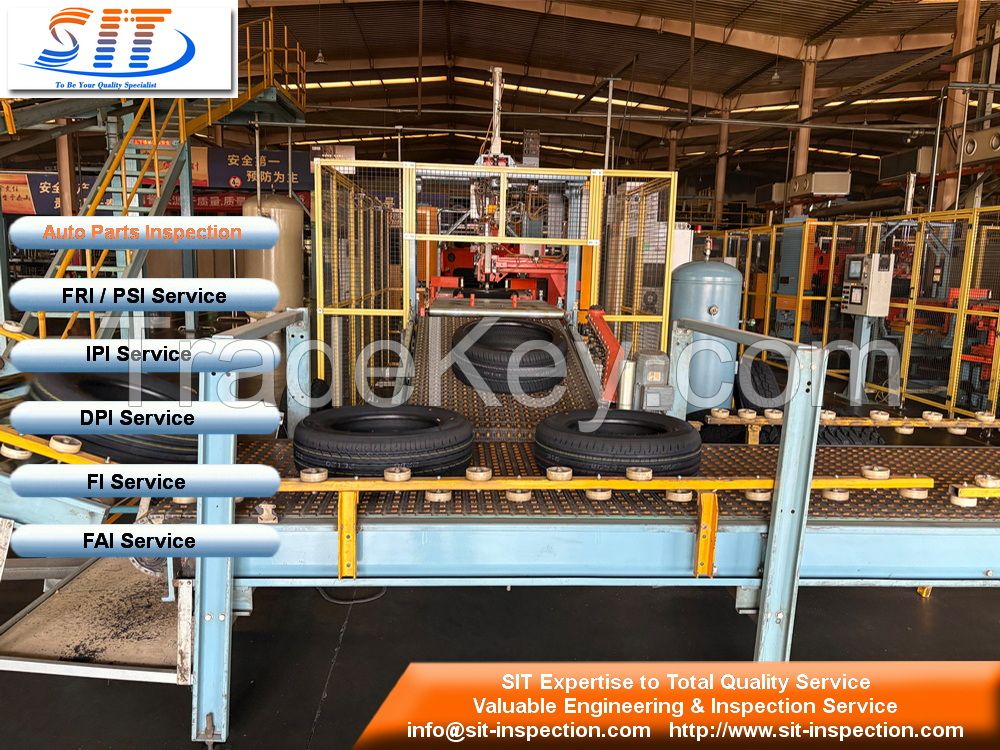
> Automate inspection inline
At automobile parts manufacturing sites, which require mass
production and high-quality manufacturing, there is a limit to
visual inspection by human hands. In order to improve
productivity and quality, measuring instruments should be
integrated into the production line and inspection should be
automated in-line.
Benefits of inline inspection include:
Faster inspection speed and increased productivity
Quality assurance can be performed by total inspection.
No labor costs and reduced human error and variability
Immediately identify abnormalities in the production line and
improve them
> Analyze and make improvements based on
data
In order to improve the quality of manufacturing, we must switch
from testing based on human senses to testing based on numerical
values and other data.
Conducting inspections based on data not only unifies the
criteria for pass/fail judgment, but also makes it possible to
grasp and predict defect trends from the transition of data. If
you make improvements based on this information, you will be able
to prevent problems from occurring and eliminate waste in the
production line.
How do auto parts manufacturers actually conduct inspections? Here are some examples of automotive vehicle inspections.
> Automation of visual inspection using measuring
instruments
Measuring instruments equipped with high-precision cameras can
automatically measure the presence or absence of scratches on
automotive parts. Depending on the measuring instrument, the
depth of the wound can also be measured in combination with laser
inspection, and a pass/fail judgment can be made based on
quantitative measurement results.
>Automation of assembly and inspection by
robot
As mentioned above, in-line is important for improving the
efficiency of automotive vehicle inspection. As shown in this
video, if bulk picking, assembly, and inspection can be completed
on one production line, quality assurance through total
inspection can be performed while increasing productivity.
> Visual inspection of complex shapes by
robots
For the inspection of automobile parts with complex shapes, the
use of articulated robots is effective. Various sensors are
mounted at the tip of the robot arm, and by moving the arm
freely, it is possible to check for defects at multiple
inspection points at once. Parts with complex 3D shapes cannot be
completely confirmed by inspection from one direction, and it may
be necessary to inspect them in multiple parts. However, if the
robot can move freely, it is efficient because it can be
inspected all at once in one process.
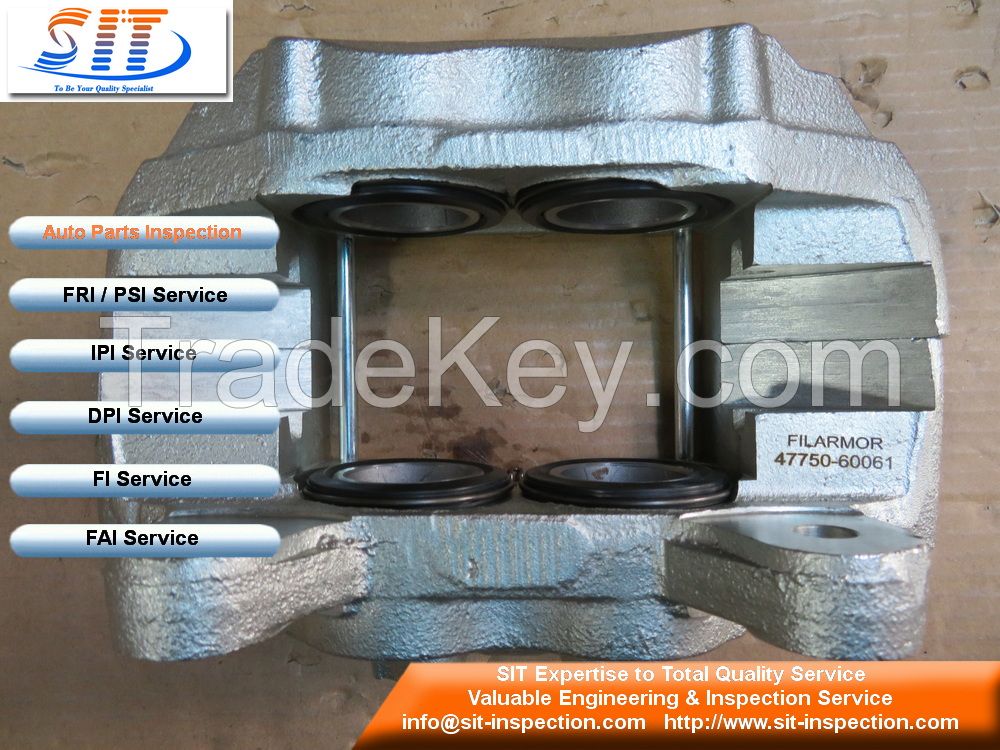
Safety: Critical safety components were found by SIT
Engineer expert which likes brakes and steering must be free from
defects to prevent accidents.
Quality control: SIT Engineer experts ensure that
parts are consistent and meet the required quality standards,
which is especially important with increasing customer
expectations.
Cost
reduction: Identifying defects early in the
process prevents costly production delays, recalls, and warranty
claims by SIT.
Reliability: SIT Inspection Service helps to ensure
the final vehicle is reliable and performs as expected over its
lifetime.
SIT as one of the primary benefits of auto parts inspection services is ensuring product quality. By carefully inspecting auto parts, manufacturers can address problems before they impact the production process or customer satisfaction.
Additionally, Auto parts inspection services can lead to cost reductions. By locating and fixing defects early on in the manufacturing process, manufacturers can avoid production delays or customer returns. Effective quality assurance also helps manufacturers optimize their production processes and improve overall efficiency, leading to more cost savings in the long run.
Another advantage of quality assurance for auto parts is risk mitigation. Thorough inspections help identify potential risks like structural weaknesses. By addressing these risks during the inspection process, manufacturers can prevent serious product failures that lead to safety hazards and liability issues.
Furthermore, quality assurance helps manufacturers maintain compliance with industry regulations. Each industry has specific quality standards and regulatory requirements that manufacturers must meet. By implementing parts inspection services, manufacturers can demonstrate their commitment to producing safe and compliant products.
| 国家: | China |
| 型号: | - |
| 离岸价格: | 188 ~ 228 / Unit ( Negotiable ) 获取最新报价 |
| 位置: | - |
| 最小订单价格: | 188 per Unit |
| 最小订单: | 1 Unit |
| 包装细节: | - |
| 交货时间: | 24h |
| 供应能力: | - |
| 付款方式: | Other, PayPal, Money Gram, Western Union, L/C, T/T |
| 產品組 : | - |